John Slevnik · Family history
Mining, Migration, Mayhem and Murder
A Williamson County Immigrant’s Story
About this story. The narrative draws on many individual source records and historical information about the places and events. The conversation was imagined by Laura to tell the story.
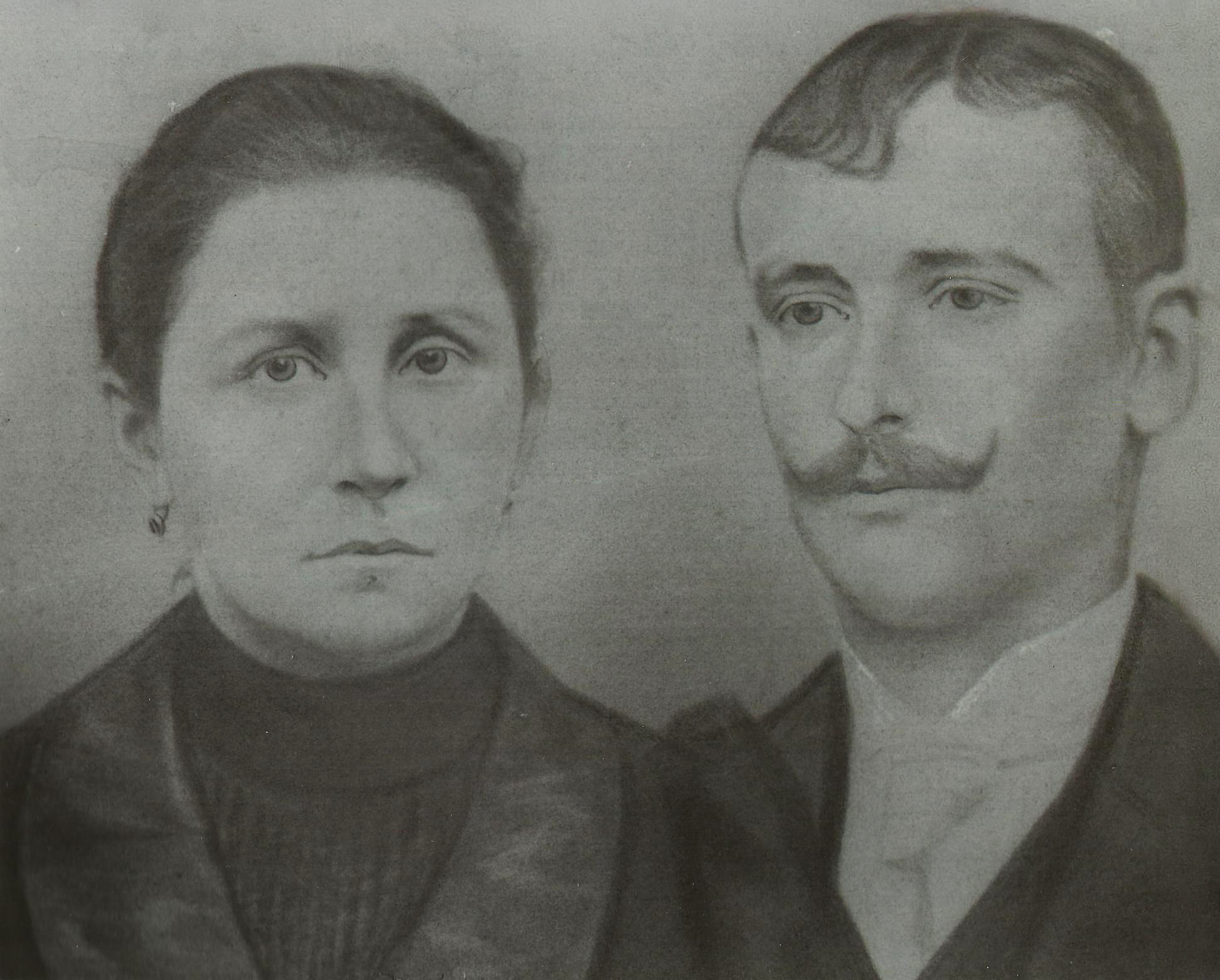
In 1940, eighteen-year-old William Dusham lived with his mother, Dixie, in John Slevnik’s household outside Johnston City. John was sixty-four. Europe was at war again.
“Why is my back so bad, you ask? The slate did it, William, back in January of 1923. I was lifting it, and I hurt my back.” John continued, “You don’t think about your back when it’s doing what you ask. Afterward, you discover how many things require bending. I was out of work for quite a while. They put my name in the state coal report.1 A few words. Other men on those pages had injured hands and feet, broken bones, and many died. Falling coal, slate and timbers. Pit cars and machinery accidents. I just had a sprain, so I live to tell you about it.
“I’d been bringing up coal since I was young like you. I was born and raised in beautiful mountain villages east of Ljubljana.2 I served my required Army time as a young man.3 I mined coal near Trbovlje, where Teresa and I married. We were Slovenes, but the country was called Austria-Hungary back then, and our papers were written in German.
“Men followed the mining work. The German mines needed workers and paid more. A lot of men were going there. Teresa and I took the boys with us and went to Recklinghausen, Germany, where I worked at the face of the coal seam.3, 4
“Three years later, in 1908, I left for America to find a home in the new country. Teresa brought our little sons Joe and Matt the next year. There were many months between our travels.5 That was difficult, but once she arrived, we were a family again in a new place. And such a big country!
“In Slovene, our names were Janez, Terezija, Jožef and Matevž. On the German papers, they were written Johann, Teresia, Josef and Matthias. But here, we called ourselves like the Americans do: John, Teresa, Joe and Matt.
“We lived first in La Salle. There were Slovene businesses, societies, a church, a school. Think about what it means to arrive somewhere across the ocean and hear words you understand.6 We also heard many other languages, smelled and tasted other foods. Families in our neighborhood came from many European countries, some of which I knew nothing about. Around that time, I painted rail cars, one of my few non-coal jobs. Our daughter Theresa was born in 1911.7
“Then we came south. You’ve grown up with these towns, William. Before you were born, they were really filling with people. Williamson County had more than twice as many in 1920 as it had in 1900.8 New coal was found here, and the railroads opened the coalfield. A line was built between Carbondale and Johnston City through Herrin’s prairie before I arrived.9 More mines meant more tracks, more places to load coal, more business and buildings, more people, and eventually, motor cars. Prairie fields became streets and houses.
“You could hear all the work before you saw it. Engines straining, couplings striking together, coal rattling into a car all day and most of the night. Hammering of houses being built. Smoke hanging over the tracks. Around the workings, everything seemed to acquire the same black coating. The dust came home with you. In your hair, in the creases beside your nose, underneath your nails. You washed, and the water showed you what you’d brought out.
“There were machines in the mines, but still plenty of handwork for a man to do. A miner had to understand the roof above, the track and slate underfoot, the space a moving car needed. A helmet lamp showed you a little patch of what was right in front of you. Beyond it, the mine went on and on in blackness, except for the other little lights.
“And all those voices when the men were together. Italian, Polish, German, Croatian, Hungarian, and others I still can’t name… many people who had come a long way to do much the same work as our family. Plenty of Americans, too, and men from Kentucky and farther south. I learned a little Italian. Buongiorno. Good morning. Grazie. Thank you. Enough to be polite, anyhow. There were many Italian families and shopkeepers here.
“I bought my own lot and house in Johnston City in 1915. Nine hundred and fifty dollars. That was the first home I owned. The deed reserved any coal underneath the surface. I could buy the ground on top, but the coal was always somebody else’s.10
“I began my citizenship papers in 1914. Later that year, the old country went to war. Sarajevo. The archduke and his wife were killed in Bosnia, within the same empire and not far from where Teresa and I were born. A month later Austria-Hungary declared war on Serbia. Then Germany joined in. Both countries where we lived were now at war. And today we’re reading in the papers about another big war in Europe.
“I served in the Army before I came to America, as they required of men who were fit for service.3 The papers said the consulate was telling men in the reserves to get ready to go back and fight. Our paper, Proletarec, said, ‘Don’t go. Stay here.’ They said men shouldn’t support the monarchies and the rich.11 I heard many men did try to answer the call but couldn’t catch a ship overseas. They were stuck in New York trying to get transportation.12
“I became a citizen in 1916, and that made Teresa and the boys citizens also. The following spring we started a Yugoslav Socialist Club here. Twelve men and one woman. They made me the recording secretary.13, 14 We held meetings. We kept records. Workingmen ought to have a say about the conditions they live and work under, William. The mines were dangerous and we were paid so little compared to the owners.
“The Great War continued. At home, we had three children and boarders. Teresa took care of the boarders’ meals, laundry and the cleaning. That extra money helped us get through strikes and, later, the time I was laid up with my back.
“In August 1918, they raised the age limit for the draft, so I had to sign up even though I was forty-two. My son Joe was about sixteen. Teresa was concerned that Joe and Matt would be called to serve if the war didn’t end soon. If it went on long enough, all three of us might have been called. But then the war ended in November of that year.15”
“Did Joe go into the mines, too?” William asked.
“By 1920, Joe and I were both miners.15 You can teach a boy to be careful. Then you must let him go underground, knowing even careful men get hurt; I saw it all the time. But we come from a long line of miners. That’s what we do.
“Let me tell you about the big troubles here. You asked me about that.
“You’d only just been born when the mayhem began. It started in 1922. There was a strike, and the company at the strip mine brought in nonunion men to load and ship coal. That made the union men angry. There was shooting. Some union men were killed. Then the mine was surrounded, and men who came out were taken away and murdered. Twenty-three dead altogether—three union miners and twenty on the other side.16 It was all anyone talked about.
“Men who had come here for work lay dead in the street in Herrin. Whatever a man believed about the strike, he had to think on that.
“Afterward came more trouble. Prohibition had made liquor illegal. It hadn’t made people stop wanting it. There was money in selling it, and armed men ready to fight over that money.
“Then the Klan said it would clean up the county. They talked about law and order, but they also talked against Catholics and foreigners, and that scared Teresa and many of the women. You could work here, buy property, become a citizen, and still hear yourself described as someone who didn’t belong.
“A man named S. Glenn Young led the raids. Armed men went into places where liquor was sold and into homes. Italian and French immigrants were among those complaining of rough treatment and robberies. Their consular representatives protested.16
“By February of 1924, they were shooting in Herrin. A hospital came under fire. Patients had to lie on the floor to keep clear of the bullets.16 Doc Black wrote to Governor Small: ‘Herrin is in a reign of terror. For God’s sake give us Martial law.’17 A doctor, William! Asking for soldiers so people would be safe in his hospital.
“We heard about the massacre, the raids, and gunfights. The papers said a bystander named Otto Roland was killed outside Smith’s garage in Herrin that August.18 We were unsettled. We had to be careful what we did and where we went, and we all kept the children close. But people lived here between the headlines. They opened their shops, took in washing, went to work in the plants and the mines. We had work to do, and children needed shoes whether Williamson County was quiet or not.
“We were trying to make something here. I bought five acres of land, and we moved out of town where we could have animals. Teresa kept the household going. The children were growing. We had a nice life.
“Then Teresa was killed.”
“December twenty-third, 1924, right before Christmas. She was shot by her brother Matthew during an argument. It’s a little confusing because her brother Matthew and our son Matt had the same name. After the deputies arrested Matthew, he admitted it, then denied it. Joe and I were at work in the mine when it happened. Our poor daughter was thirteen. She had gone to the store, and when she came home, Matthew pointed a gun at her and stole our house money.19, 20 After Matthew ran off, Theresa got the neighbors to help her look for her mother; they found her body in the cellar. The posse chased Matthew and caught him, but he escaped from jail. As far as we ever heard, no one caught him again. Did I tell you Matt took up boxing in Chicago? He went by the name Matthew Schultz. But that’s a story for another time.”
Whether all this lawlessness and shooting going on in Williamson encouraged Matthew to settle his argument with Teresa with a gun, we’ll never know.
“The trouble didn’t stop when the Klan lost its hold. Birger’s gang and the Shelton brothers’ gang were fighting each other. Bootleg liquor, roadhouses, stolen cars. They even had armored trucks carrying gunmen along the country roads. Shady Rest, Birger’s place here in the county, blew up in January of 1927. The next year they hanged him in Benton for ordering the murder of Joe Adams, the mayor of West City.21
“The years after Teresa died were a fog. We never really got over it. Young Theresa and I were still living out here in 1930, and by that time things had settled down in the county. I was loading coal, and she was taking care of the house. Later she followed in her brothers’ footsteps to Chicago, where she met a Scot, James Stripling. He had been a coal miner too, down in Macoupin County, before moving to Chicago. James and our son Matt lived around the corner from each other, which is probably how Theresa met James. They married in Lake County, Indiana. My three children made lives in the big city, but I stayed here.22, 23
“Nowadays, the mines have lost a lot of jobs. Some closed, and people are leaving for the cities. Machines took over more of the work. A place could have coal left underneath it and men above it with no work.24 I can’t work anymore myself.25
“And now another big war in Europe, and you sitting here a young man. If this country gets into that war, they’re going to want you to fill out a draft card.”
Dixie called them to supper. William stood, thinking about all he had heard, while John put his hands on the chair arms and pushed himself up, his old back creaking and sore.
The Illinois coalfields
Two photographs from Williamson County, taken the year before the story’s opening scene.


Source notes
- Illinois Department of Mines and Minerals, Forty-second Annual Coal Report of Illinois, 1923, 305, John Slevnik, January 16, 1923 (View source). Original page preserved in Ward’s research. The entry records a sprained back while lifting slate. Laura Ward’s reading places John’s absence from work beyond the reporting period; the narrative does not specify a recovery time. ↩
- Motnik Catholic Parish, Krstna knjiga / Taufbuch (baptismal register), 1835–1876, p. 87; Johann Slivnik, born and baptized December 26, 1875, Motnik house no. 24, son of Martin Slivnik and Maria Sajovic; digital image 93, Matricula Online; citing Nadškofijski arhiv Ljubljana, sig. 01529. Sv. Jurij ob Taboru Catholic Parish, Krstna knjiga / Taufbuch (birth and baptism register), 1860–1893, sig. 03135, p. 152, third entry, Elizabeta (Elis) Slivnik, born and baptized November 2, 1878, and p. 177, first entry, Eleonora Slivnik, born February 17 and baptized February 18, 1882; Matricula Online, image 151 and image 176; citing Nadškofijski arhiv Maribor. Both entries place Martin Slivnik and Maria Sajovic’s family at Ojstriška vas, house no. 27 (formerly no. 32). ↩
- Stadt Recklinghausen, Meldekarte for Johann Slivnik and family, 1905–1908; Stadt- und Vestisches Archiv/Institut für Stadtgeschichte, Recklinghausen, Germany; digital scan supplied to Laura Ward, October 6, 2026, “Slivnik, Johann.PDF,” privately held. The occupation reads Hauer. Hat gedient establishes prior military service, but neither a unit, exact dates, reserve class, nor the sequence of military service and early mining employment. Archive call number remains to be obtained. For compulsory military service, see Ke-Chin Hsia, Victims’ State: War and Welfare in Austria, 1868–1925 (Oxford University Press, 2022), chapter 1, “Government Poverty and Incentive Pensions in the Nineteenth Century,” section “Creating an Army of Citizens” (View source). Hsia identifies the Military Law of December 5, 1868 (RGBl. 151/1868), as establishing universal military service for militarily fit male citizens in both halves of Austria-Hungary, with obligations beginning at age twenty. This supports the historical context for “required Army time”; the Meldekarte separately establishes John’s prior service, not his precise service dates or duration. ↩
- Saška Štumberger, “Slovenski selitveni tokovi v Nemčijo in spreminjanje vloge slovenščine,” Dve domovini / Two Homelands 22 (2005): 95–114, especially 101 (View source), citing Erich Werner, Slovenci v Porurju (1960) (1985), 77. Štumberger was consulted; Werner was not independently consulted. Recruitment and wage incentives are general context, not a proved arrangement for John. ↩
- Recklinghausen Meldekarte cited in note 3, departure entry, September 29, 1908. New York passenger arrival, Zeeland, October 13, 1908, John Slivnik, p. 42, NARA T715, roll 1156 (View source). Argentina, August 25, 1909, list 26, lines 8–10, Terezya, Josef, and Matheus Slivnik, T715, roll 1322, images 751–752 of 853 (View source and View source). Full manifest pages require final checking. The narrative uses the family-name forms supplied in Ward’s research; Jožef remains an unverified Slovene equivalent for Joe, and the reading Matevž is provisional. ↩
- Jurij M. Trunk, Amerika in Amerikanci (1912), part 8, “LaSalle,” translated by the Slovenian Genealogy Society International, FEEFHS, “Reverend J. M. Trunk—Illinois 1912” (View source). Translation consulted rather than original Slovene page; original wording and page require collation. No personal Slevnik membership or parish attendance is inferred. ↩
- 1910 U.S. census, La Salle County, Illinois, La Salle Ward 4, ED 108, sheet 14B, dwelling 245, family 272, John Slevnik household, 1403 Fifth Street; T624, roll 300 (View source). La Salle birth record, Theresa Slevnik, November 5, 1911, file M548, filed December 31, 1911; certification issued January 18, 1956, privately held by Ward. The census occupation is car painter; identification specifically as rail cars requires corroboration. ↩
- U.S. Bureau of the Census, Thirteenth Census—Abstract with Supplement for Illinois, table I, printed p. 634 (View source); Fourteenth Census—Population, Illinois: Composition and Characteristics, tables 9 and 12, 18, 30–31 (View source). Williamson County population: 27,796 in 1900; 45,098 in 1910; 61,092 in 1920. Counts carried from the county census research and corroborating historical population table; final census-table collation remains open. ↩
- Malcolm Brown and John N. Webb, Seven Stranded Coal Towns: A Study of an American Depressed Area, Research Monograph XXIII (Washington: U.S. Government Printing Office, 1941), 4–7, 109–110 (View source). New-mine figures cover Williamson and Saline Counties together. For the Carbondale–Johnston City line built in 1895 and Herrin’s growth, see Williamson County Historical Society, “Herrin History” (View source). ↩
- Williamson County, Illinois, Deed Record 123:284, Ira M. and Amelia Leigh to John Slevnik, June 2, 1915, recorded June 4; recorded copy supplied in Laura Ward’s research, “Leigh-to-John-Slevnik-WD123-p284.pdf.” The deed describes Lot 4, Block 4, the $950 consideration, and mineral/mining reservations; it does not describe a dwelling. ↩
- “Pozor slovenski delavci!,” Proletarec, August 4, 1914, p. 1 (View source). Marjan Drnovšek, “O stališčih slovenskih socialistov v ZDA do vojne in jugoslovanskega vprašanja med prvo svetovno vojno,” Prispevki za zgodovino delavskega gibanja 15–16 (1975–1976): 75–96, especially 76–77, discussing “Proti krvavi vojni,” Proletarec, August 4, 1914 (View source). For consular calls, Tamara Scheer, “Only a Myth? The Solely English-Speaking Habsburg Army Conscripts from the United States, 1868–1918,” May 11, 2020, Botstiber Institute for Austrian-American Studies (View source). The narrative’s “Don’t go. Stay here.” is a brief translation of the paper’s appeal. The full August 4 issue is available at the Digital Library of Slovenia. “Austrians in America to Be Ordered to Field,” Chicago Daily Tribune, July 27, 1914, p. 2 (Newspapers.com), reports the ambassador’s instructions to consuls to warn reservists to prepare to return. “Soldiers Here Wait War Call,” Chicago Daily Tribune, July 28, 1914, p. 3 (Newspapers.com), reports the Chicago consulate’s instruction to reservists to be ready for the call. ↩
- “15,000 Register to Fight for Germany and Austria,” New York Herald (New York), August 4, 1914; digital newspaper page, Library of Congress (View source print00211430461/1914080201/0111.pdf). Printed page number remains to be verified. The report describes registered German and Austro-Hungarian reservists awaiting transportation, some having given up employment, and representatives saying they did not know how they would get the men abroad. It supports transportation difficulties, not a claim that no reservists sailed or that John attempted to return. “41,500 Held in New York,” The Free Press (Carbondale, Illinois), August 7, 1914, p. 1 (Newspapers.com), also reports reservists waiting in New York for passage. ↩
- “Naznanilo,” Proletarec, May 22, 1917, p. 7, col. 2, “Johnson City, Ill.” (View source). Announcement crop preserved in Ward’s research records the founding on May 13, twelve male members and one female member, and John as zapisnikar (recording secretary). Full page requires final collation. ↩
- Jack L. Burke, Billie Jean Cromer Burke, and Jean L. Jones, compilers, Naturalization Petitions and Records, Williamson County, Illinois, vol. 1 (Marion: Williamson County Historical Society, 1997), 77–78, John Slivnik; citing Circuit Court Petition and Record Book 3, document 184, p. 34: petition April 27, 1916; citizenship granted September 25, 1916; certificate 370396. The declaration of intention dates to January 1914. For a wife’s derivative citizenship under the law then in effect, see Marian L. Smith, “‘Any woman who is now or may hereafter be married . . .’: Women and Naturalization, ca. 1802–1940,” Prologue 30, no. 2 (Summer 1998), National Archives (View source : accessed October 28, 2026). For minor children deriving citizenship through their father’s naturalization, see National Archives, “NARA Coast to Coast: Naturalization, part 2,” NARAtions, September 20, 2010 (View source : accessed October 28, 2026). ↩
- John Slevnik, World War I draft registration, September 12, 1918, serial 415, Williamson County Local Board 2, Herrin, Illinois; RG 163, NARA M1509; original front/back preserved in Ward’s research. 1920 U.S. census, Williamson County, Johnston City in Herrin Township, ED 175, sheets 26B–27A, John Slevnik household, beginning lines 96–100; T625, roll 419 (View source). John’s employer on his card was Johnston City Coal Company. For expansion of registration to ages eighteen through forty-five on August 31, 1918, see Library of Congress, “World War I Draft” chronology (View source). Joe, born February 23, 1902, was sixteen in September 1918. Teresa’s concern in the narrative looks ahead to the boys’ possible eligibility if the war continued. Household boarder continuation requires final image collation. ↩
- Illinois Historic Preservation Agency, “1922 Herrin Massacre,” Event Timeline (View source); Southern Illinois University, Educating with Evidence, “Module 1: S. Glenn Young and the Ku Klux Klan” (View source); and “The Ku Klux Klan in Williamson County, Part Two,” September 20, 2013, Marion Illinois History Preservation (View source), drawing on Oldham Paisley and Paul Angle. For Italian immigration around Herrin, see University of Illinois, Mythic Mississippi Project, “Herrin memorials” (View source). John’s Italian vocabulary and family feelings are elements of the imagined conversation. ↩
- Dr. J. T. Black to Governor Len Small, 11 February 1924, Lennington Small Papers, BC577, box 280, folder 6, “Herrin – Ku Klux Klan, Feb. 6–Oct. 11, 1924,” Abraham Lincoln Presidential Library and Museum, Springfield, Illinois. Quotation checked against the photograph reproduced in John Griswold, Herrin: The Brief History of an Infamous American City (Charleston, South Carolina: The History Press, 2009), 101. Christopher A. Schnell, manuscripts curator, confirmed the location of the original and the completeness of the published reproduction in an email to Laura Ward, 28 October 2026. ↩
- “Jury Names Slayers in Herrin Riot,” Albany Evening Herald (Albany, Oregon), September 4, 1924, p. 5; digital image, Historic Oregon Newspapers. The account describes Otto Roland as a bystander and reports that the coroner’s jury did not identify who shot him. ↩
- Illinois death certificate 43209 (1924), registration 127, Trecia Slevnik, December 23, 1924, coroner C. A. Bell (View source). Reference and transcription carried from original-record research. Teresa’s brother Matthew and her son Matthew are different people. Arrest is documented in contemporary reporting; conviction is not established. ↩
- Universal Service, “Woman Slain, Brother Held for Murder,” New York Evening Journal, December 24, 1924, p. 7, GenealogyBank; clipping preserved as “New_York_Evening_Journal_1924-12-24_7.pdf.” Williamson County Historical Society, murder-indictment W index, Matthew Woodishek, file 1925-I-003; the index is a finding aid, not the prosecution file. Other reports differ on the daughter’s name or weekday. Theresa’s birth establishes age thirteen. The report describes Theresa returning home. Ward has found no newspaper evidence of Matthew’s recapture; the narrative therefore says, “As far as we ever heard, no one caught him again.” For the escape, see “Murderers Who Escaped from Jail: Matt Wodishek,” The Marion Evening Post (Marion, Illinois), March 6, 1925, p. 2; digital clipping, Newspapers.com. ↩
- Illinois State Museum, “20. Southern Illinois: Deals You Can’t Refuse,” RiverWeb, undated webpage (View source Southern_20IL_20gangs-1920s.html : accessed 27 October 2026); People v. Birger, 329 Ill. 352, 160 N.E. 564 (Illinois Supreme Court, 24 February 1928), opening statement of the evidence; digital transcription, Go Syfert (View source : accessed 27 October 2026). ↩
- 1930 U.S. census, Williamson County, rural Herrin Township, ED 100-44, sheet 15B, lines 82–83, John and Tresia Slevnik (View source). John was enumerated as a coal loader in 1930. For his inability to work in 1940, see note 25. ↩
- 1930 U.S. census, Chicago, Joe Slevnik household, sheet 22A, DGS 004950444, image 48 (View source). Lake County, Indiana, marriage return, James Stripling and Trecia Slevnik, October 13, 1934, vol. 91, p. 207, application 415, DGS 007578290, image 142 (View source). Illinois death certificate 45366 (1944), registration 38, John Slevnik, October 17, 1944, informant Matt Slevnik of Chicago, DGS 004152641, item 1, image 390 (View source). For James and Matt’s nearby Chicago residences, see 1930 U.S. census, Cook County, Illinois, population schedule, Chicago, ward 8, block 38, ED 16-369, sheet 20B, NARA T626, roll 429, FamilySearch digital film 004950416, dwelling 285, family 335, Peter McGreehin household, Matthew Schultz, line 54; dwelling 288, family 340, Cecila A. Stripling household, James Stripling, line 78; enumerated April 14, 1930; digital image, FamilySearch (View source : accessed October 27, 2026), image 40 of 54. James, thirty, single, a welder born in Scotland, lived at 8147 Woodlawn Avenue with his widowed mother; Matthew, twenty-five, single, a boarder and chauffeur in the coal and ice industry, lived at 1206 East 82nd Street. Both appear on the same sheet; Ward supplied the image confirming James’s Scottish birthplace. Laura Ward’s collected family research identifies Matthew Schultz as Matt Slevnik and explains that he adopted the surname when he began boxing. The neighborhood connection is the basis for “Maybe living near her brother was how she met James.” James’s earlier Macoupin County mining record and Matt’s boxing records remain to be added. ↩
- Brown and Webb, Seven Stranded Coal Towns, iii–iv, 54–66, especially 62, 65–66. Mine abandonment and mechanization reduced employment across Williamson, Franklin, and Saline Counties. Loading equipment spread after 1924, with more labor-displacing mobile loaders introduced during the Depression. The report distinguishes reduced working time from outright dismissal. Regional trends do not establish why each Slevnik child moved. ↩
- 1940 U.S. census, Williamson County, Illinois, Herrin Township, ED 100-50, sheet 16B, lines 55–57, John Slevnik household; NARA T627, roll 911, census image View source John’s entry is marked “U” (unable to work), as read and confirmed by Laura Ward. ↩

Additional research sources
- Dol pri Hrastniku, baptismal register 00486, p. 45, Teresa Vodišek, October 8, 1874 (View source); Trbovlje–Sv. Martin, marriage register 04329, opening 55, entry 96, September 29, 1901, digital image 56 (View source). Citations and readings carried from existing research; parish images require final collation.
- Vlado Valenčič, “Izseljevanje Slovencev v tujino do druge svetovne vojne,” Dve domovini / Two Homelands 1 (1990): 43–82, especially 43–45, 62–64 (View source). Regional economic conditions, destinations, and return migration; not evidence of the Slevniks’ personal motives.
- “Zastopniki Proletarca,” Proletarec (Chicago), July 29, 1913, p. 3, col. 6, John Slivnik, Johnston City; digital image, Digital Library of Slovenia. Separately, Proletarec (Chicago), list of local representatives, undated clipping, Johnston City entry for John Slivnik, Box 599; digital image “Upload-003.png.”
- Jack L. Burke, Billie Jean Cromer Burke, and Jean L. Jones, compilers, Naturalization Petitions and Records, Williamson County, Illinois, vol. 1 (Marion: Williamson County Historical Society, 1997), 77–78, John Slivnik; citing Circuit Court Petition and Record Book 3, document 184, p. 34. Published abstracts, not newly inspected court originals. John Slivnik deposition, May 3, 1921, Cuyahoga County, Ohio, depositions 1921– 1924, nos. 13415–18776, image 592 of 1339 (View source); residence-since-1911 statement requires reconciliation with Theresa’s La Salle birth.
- Williamson County Deed Records 171:520–521, September 26, 1922, recorded October 11; 174:547, April 24, 1923, recorded April 26; and 173:583–585, Old Ben Coal Corporation to John Slevnik, May 7, 1923, recorded August 15. Recorded copies supplied in Ward’s research, “Received-Deeds-2026-10-19.” No present-day dwelling identification is inferred.
- 1950 U.S. census, Cook County, Chicago, ED 103-946, sheet 4, lines 26–30, continuing sheet 5, line 1, household 39, 8323 Dorchester Avenue, James and Treasa Stripling (View source). Original sheets 4 and 5 preserved in Ward’s research. This later census is retained from the original source apparatus; it is not part of John’s imagined knowledge in 1940.